
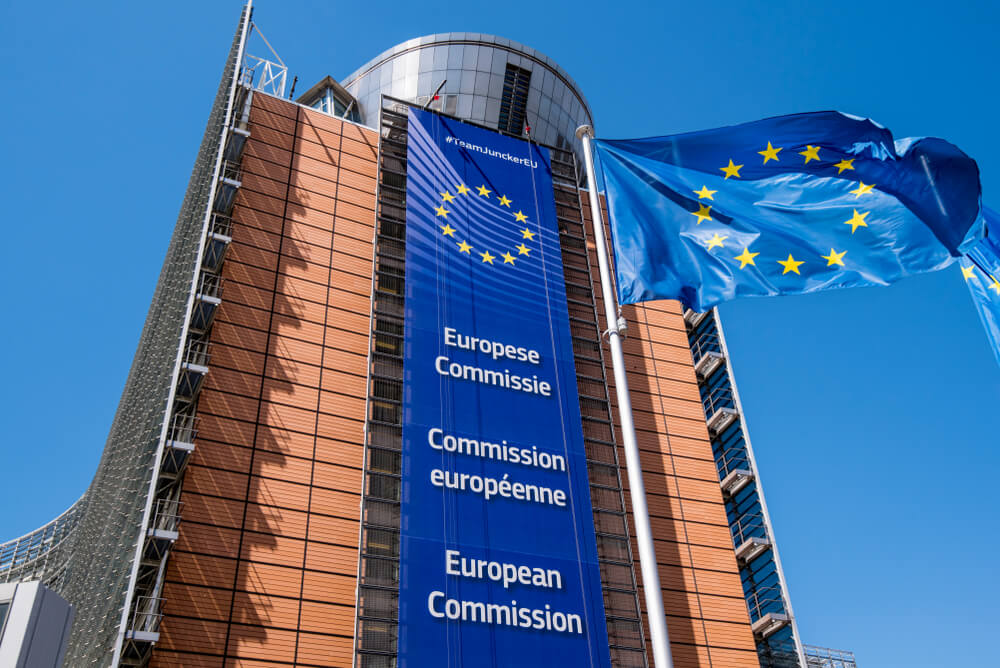
European Commission leaders recently said they want to reserve two-thirds of a coveted spectrum band for operators working within the EU. This is a proposal, and the change will not take place until May 2027, when the current authorizations expire.
Still, it represents a meaningful change in how governments think about spectrum. For decades, they treated it mainly as a technical and regulatory matter; now, they see it as an economic, technological and security asset.
Why? Because modern states need more wireless capacity – more room on the airwaves to send data – and there are only so many usable frequencies available. Spectrum cannot be made in a factory, cannot be dug out of the ground. It cannot be imported from somewhere else.
Spectrum, in other words, is finite. And so, though demand is rising everywhere – among mobile networks, satellite companies, armies, Earth observation operators, drones and direct-to-device services, among others – supply cannot rise to meet it.
With more systems depending on spectrum, spectrum has become scarce, and what is scarce is valuable. Because not everyone can have access to spectrum, governments and regulators must decide who gets access and who doesn’t.
Who should control the airwaves? For what should they be used? Which uses matter most in a crisis? Which operators can be trusted? Which must remain under national or European control?
Spectrum has become highly political.
A scarce strategic resource
The European Commission’s proposal is significant, not so much because it highlights a tension between European and American satellite operators, but because it shows that spectrum is a scarce strategic resource. If Europe wants to defend itself (it does), if it wants better digital infrastructure (it does), if it wants its own, sovereign satellite communications (it does), and if it wants a larger, more competitive space industry (it does), then it needs to allocate spectrum to those areas.
The case for giving over spectrum to defense is, of course, clear: radar, missile defense, drones, satellite communications and electronic warfare all need spectrum, and if they don’t have it, those systems are weakened. But commercial demand is also rising. If governments assign spectrum to commercial operators, with many different users, it could be difficult to recover or reallocate it later on. They might choose to make money and gain investment today only to find that they’ve lost the ability to act tomorrow.
The market gets this. When SpaceX paid $17 billion to buy spectrum licenses from EchoStar, it was clear to all observers that this was the purchase of a scarce, non-dilutive strategic resource. Amazon’s $11.6 billion acquisition of the satellite firm Globalstar is chiefly about obtaining highly coveted, globally licensed mobile satellite services spectrum – the digital real estate needed to beam cellular data directly to smartphones from space. It was a direct-to-device play, and a further sign of how big commercial companies are thinking about spectrum.
New tech can provide an assist
New technologies will ease some of the pressure on operators that provide critical data but depend on spectrum they neither own nor control. Optical communications, hybrid networks, edge processing – all of these could help them to avoid a scenario in which they are unduly exposed to the whims of regulators, the moves of rivals and changing political priorities.
The fact remains, however, that the airwaves are finite, and that modern life increasingly relies on them. China has understood this for some time, binding spectrum policy to industrial policy, military needs and increasing national power. Europe and the United States must close the gap.
This is why the European Commission’s proposal should not be seen as some isolated dispute over satellite licenses. It is proof of something more significant: that spectrum is considered one of the critical strategic resources of the 21st century.