The Obama administration’s 2009 Car Allowance Rebate System—better known as “cash for clunkers”—was a $3 billion federal scrappage program intended to stimulate demand for more fuel-efficient vehicles. Analysts continue to debate its overall value to the automobile industry and U.S. consumers, but the model could be adapted to revitalize the U.S. commercial shipping industry.
Under a maritime version, U.S. shipping companies would receive substantial subsidies to retire tankers and other vessels that are 20 to 25 years old and replace them with ships built in U.S. shipyards.
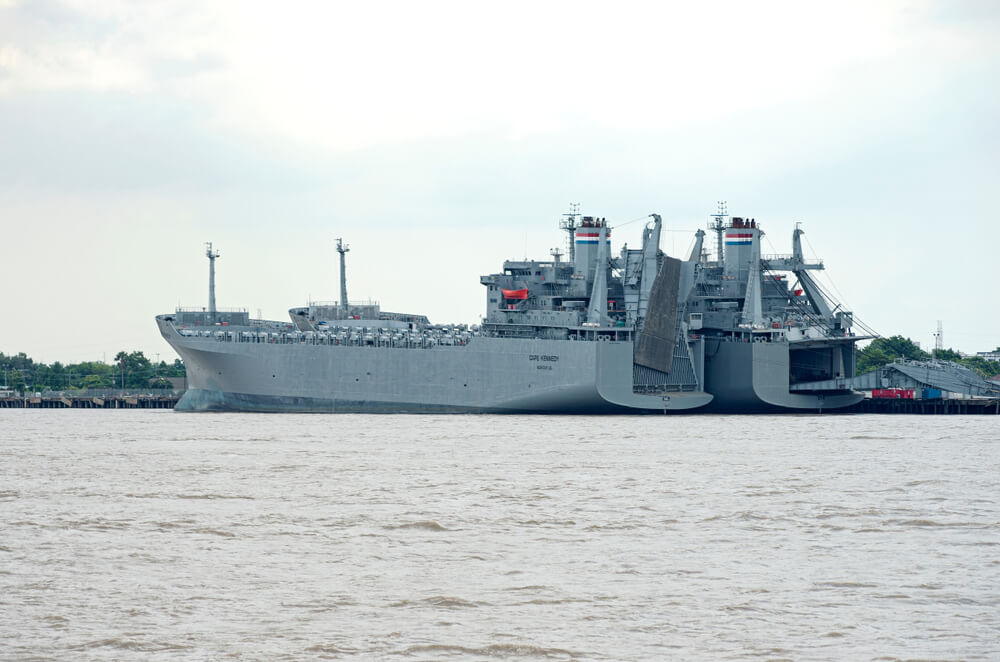
Suitable retired vessels could then replenish the U.S. Maritime Administration’s (MARAD’s) aging Ready Reserve Fleet. This formation of ships, which comprises 50% of government sealift, transports Army and Marine Corps unit equipment, combat support equipment and initial resupply during critical surge periods — the period of time before commercial ships can be secured for similar support.
Establishing age limits for the U.S.-flag fleet could sustain this cycle, supplying the reserve fleet with newer vessels while generating steady demand for domestic shipbuilding. The principal drawback is that the program would likely require continuing federal support.
Not a new idea
The idea of a maritime “cash for clunkers” program is not new. From 2013 to 2018, China used a similar initiative to reduce excess shipbuilding capacity, granting shipping companies $247 per gross ton to replace obsolete vessels while stimulating domestic construction.
During the same decade, South Korean shipbuilder Daewoo received $1.9 billion in government-backed debt support, in addition to $10.7 billion directly from the South Korean government. Despite that assistance, Daewoo continued to founder financially until Hyundai Heavy Industries agreed to acquire a 56 percent stake to keep it solvent.
In 2022, Hanwha Group acquired 49 percent of Daewoo with support from the Korea Development Bank; it completed the takeover in 2023 and rebranded the company as Hanwha Ocean. These interventions demonstrate China’s and South Korea’s firm commitment to maintaining sovereign commercial shipbuilding capacity. Together, the two countries now account for more than 80 percent of global commercial ship production.
By contrast, the United States invested little in its commercial maritime industry before the Ships for America Act, a proposal now under consideration in Congress that would create subsidies and support infrastructure to jump start U.S. commercial and naval shipbuilding, and the Trump administration’s Maritime Action Plan.
From 2015 through 2017, MARAD provided $15 million in small shipyard grants and $49.7 million through the Federal Ship Financing Program, commonly known as Title XI.
More recently, the United States has invested over $800 million in port facilities, and elements of the Ships for America Act have been incorporated into the House version of the fiscal year 2027 National Defense Authorization Act. Nevertheless, much of the proposed funding and support for U.S. commercial shipbuilding remains tied to the broader legislation, which has stalled as Congress has turned to other priorities ahead of next month’s elections.
More than a commercial asset
A U.S. maritime “cash for clunkers” program could attract additional legislative support and build momentum for the Ships for America Act. It would create a pathway to modernize the Ready Reserve Fleet with U.S.-built, Jones Act-compliant vessels while generating replacement orders for domestic shipyards.
The program may require a forcing mechanism: amending the Merchant Marine Act of 1920, commonly known as the Jones Act, to require active, compliant merchant ships to retire by age 30. Although U.S. shipping companies might oppose such a mandate, construction subsidies could offset part of the replacement cost.
Critics may argue that these subsidies conflict with free-market principles, but a merchant marine is more than a commercial asset. Unlike railways, trucks, or even commercial aircraft, commercial ships constitute a national-security resource in wartime. Recent conflicts, including Operations Desert Shield and Desert Storm in 1990–1991, required few, if any, Jones Act-compliant commercial vessels. A prolonged peer conflict, however, would demand sealift on the scale demonstrated during World War I and World War II.
A peer conflict within the next three to five years could leave the United States in circumstances resembling those of 1917, when it entered the World War I largely without the ocean-going shipping needed to move vast numbers of troops and their equipment to Europe. The emergency construction programs that followed were costly and often delayed. Many vessels built for the war were made of wood or even concrete and proved largely unsuitable for postwar commercial service.
A national security imperative
Many were eventually destroyed; their remains in Mallows Bay, Maryland, and elsewhere stand as reminders of the warning Sen. Wesley Jones offered in a 1921 article about the national-security requirement for a domestically built and supported merchant fleet:
“Our shipping could be done more cheaply by others, and so we had none. When the war came this lack of shipping cost us hundreds of millions of dollars in higher freight rates or business losses and hundreds of millions of waste in the hasty building of ships to meet the emergency that threatened the overthrow of civilization, and today the papers are filled with stories of waste, corruption and inefficiency that was the inevitable result of the conditions and the situation that confronted us.”
The United States could confront a similar crisis in a future peer war. After relying for five decades on cheaper foreign shipping, it now possesses a severely diminished commercial fleet and limited capacity to expand it rapidly in an emergency.
Regardless of the fate of broader maritime legislation, Congress and the Trump administration should establish a commercial maritime “cash for clunkers” program. Properly designed, it would stimulate construction in U.S. shipyards, renew the U.S.-flag commercial fleet and replenish MARAD’s reserve fleet with newer, more maintainable vessels.
China and South Korea have demonstrated that sustaining commercial maritime power is costly. Yet failing to maintain even a modest domestic fleet could prove far more expensive in war, when allied shipping may be scarce and available only at a premium. Investment in a U.S.-flag fleet of Jones Act-compliant ships is therefore a national-security imperative.