Editor’s note: This commentary is part of our ongoing “New Voices” series, featuring perspectives from young writers on national security.
One of President Donald Trump’s frequent claims is that his policies have resulted in a dramatic decrease in illegal immigration at the U.S.-Mexico border, with the White House calling it a “profound transformation to turn back the invasion unleashed by the Biden administration — achieving levels of security unseen in decades.”
But although a 2026 analysis of U.S. Border Patrol data by the Pew Research Center shows that 2025 saw the lowest number of migrant encounters reported in more than 50 years, this is no guarantee the problem of illegal immigration is on the way to resolution. As Pew explains, “encounters” refers to apprehension of migrants entering the U.S. between official points of entry.
Indeed, historical examples in the U.S. have shown that harsh, deterrence-based border crackdowns like Trump’s are not a permanent solution. The reality is that as long as there is a will to migrate, people will find a way.
Deterrence doesn’t work
One example is the “prevention through deterrence” strategy, an effort begun during the Clinton administration in 1994 to halt the flow of illegal immigration by drastically ramping up enforcement at traditionally highly trafficked migration corridors such as El Paso, San Diego and Tucson.
The initiative made it impossible for migrants to cross at these locations without being apprehended, and it forced many to attempt alternative crossings using remote, more dangerous routes with increasing reliance on so-called coyotes, or people smugglers, to help them cross the difficult terrain, according to a study published in the Journal on Migration and Human Security.
The policy was based on the flawed premise that these new risks would be an effective deterrent for migrants, but, as noted by the Libertarian-leaning Cato Institute at the time, this was anything but the case. As enforcement grew stricter, the probability of apprehension by the border patrol increased only slightly.
The strategy also resulted in a significant increase in migrant deaths, further indicating that it was failing its intended purpose as a deterrent: migrants were simply willing to take on greater personal risk to cross.
But it wasn’t just the Clinton-era policy that missed the point. A study from the New York University and University of California Berkeley law schools shows that many U.S. border policies have not effectively deterred illegal crossings. Migrants are often desperate, seeking to escape from hardship by any means, even if that entails putting themselves in danger. The harder the crossing, the harder they try.
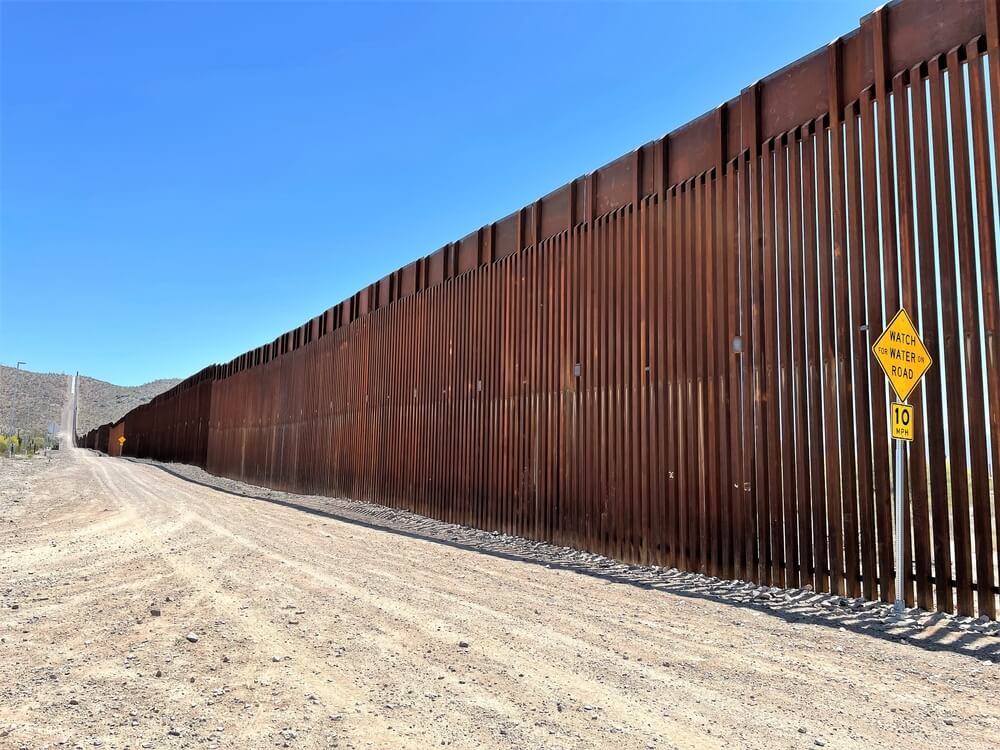
As a result, enforcement strategies meant to deter, including the administration’s vaunted border wall, end up becoming more a political symbol than an effective tool of exclusion.
The American Immigration Council, an immigrant-advocacy nonprofit, asserts that securing the 2,000-mile southern border is impossible, no matter how many fences, security systems and border patrol agents are standing guard.
Stronger focus on home country problems
Ultimately, the circumstances in a migrant’s home country push them to attempt the dangerous journey. As long as these are not addressed, migration will not be reduced on a reliable, long-term basis.
If the government truly wants to halt illegal immigration, a better plan is to employ carefully targeted foreign aid. As a study in the American Journal of Political Science found, the reasons people want to migrate are complex, and just throwing money at the problem is not enough.
Aid needs to help people believe they can build a future in their home country through “increasing people’s access and understanding of how to use local assets (i.e., physical, natural or financial resources). In other words, even if conditions abroad are generally better, development interventions may prompt the belief that ‘here, I know what I need and how to get it,’” the study said.
The more that the U.S. focuses on giving migrants reasons to stay put, the less likely it is that migration will seem like the only option.
That approach would also serve U.S. national security. When ordinary migrants are driven north by poverty or instability, they add pressure to a border system that should be focused on identifying genuine threats crossing illegally, including violent criminals, drug smugglers, terrorists and foreign agents.
If the United States is willing to spend billions trying to harden the border, it should also be willing to invest in the conditions that make fewer people feel compelled to cross it in the first place. A border crackdown may produce a temporary drop in encounters, but only a broader effort to reduce the pressures driving migration can make those numbers stay low.