
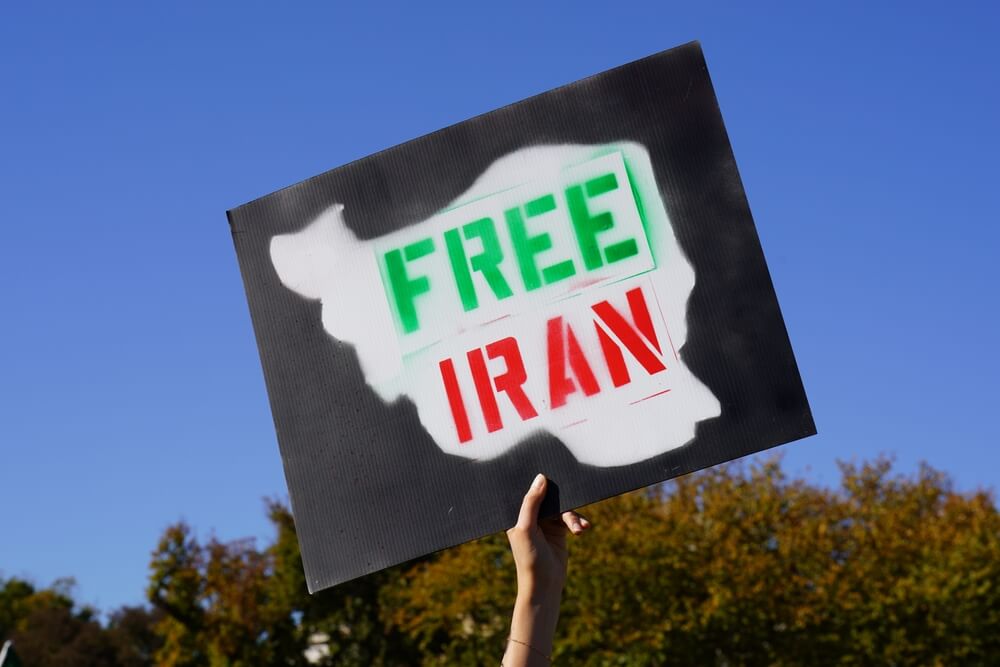
Imagine standing in a public square at sunrise, surrounded by armed security forces, knowing that nothing you say will stop what is about to happen.
In Isfahan, the morning call to prayer echoed across the central Iran city as guards brought two young men to the gallows. Their families were nearby. Mothers cried. Relatives pleaded. Security forces surrounded the square. Then the regime executed Amirhossein Safari and Abolfazl Sepahi..
They were hanged publicly on July 28 after being sentenced to death in connection with widespread protests against the government in January. They were among 12 young men prosecuted in what has become known as the Alikhani Square case. Observers have raised serious concerns about the proceedings, including closed hearings, failure to establish clear individual responsibility and allegations of ill-treatment and coerced confessions.
Nine days earlier, on July 19, the regime executed Erfan Esfandiari and Gol-Mohammad Mohammadi, two other protesters prosecuted in the same case. Eight additional defendants reportedly remain at risk. It is easy for these names to disappear into execution statistics.
They should not.
A history of torture and executions
I say this as someone who has lost many friends to executions in Iran. Behind every statistic is a name, a family, and a life the regime would rather the world forget.
Since the 1980s, generations of Iranians have risked imprisonment, torture and death for challenging the state. I am one of many who survived. Many of my friends did not. As a political prisoner in Iran during the 1980s, I witnessed executions inside prisons, at a time when there was no social media to expose what was happening. Guards would take away prisoners who would never return. Those left behind knew what had happened.
That experience shapes how I see the images from Isfahan today.
In May, Amnesty International reported that Iranian authorities had arbitrarily executed at least 36 people on politically motivated charges following grossly unfair trials since February. The regime has issued death sentences for at least 78 protesters, dissidents and others, including 41 arrested in connection with the January uprising.
Amnesty has also documented the widespread risk of torture, ill-treatment and grossly unfair proceedings for thousands detained during the protests. Yet much of the international debate over Iran focuses on other issues: uranium enrichment, missiles, sanctions, oil, negotiations, military capabilities and regional security.
These are legitimate concerns, but they are not the whole Iran story. At its center is a struggle between a population that has repeatedly demanded fundamental political and democratic change and a regime determined to prevent it.
A democratic alternative
For more than 20 years, Maryam Rajavi, the president-elect of the National Council of Resistance of Iran, has argued that neither appeasement nor foreign war against Iran is the answer. She calls the alternative the “third option” — change brought about by the Iranian people and their organized resistance.
The third option is conceptually simple, although it requires serious commitment from the western powers. It means accepting that the present regime is not a dependable long-term partner while preparing to engage with a democratic alternative.
The NCRI proposes a secular and pluralistic republic, free elections, peaceful relations with other countries, gender equality and an Iran without nuclear weapons. Its essential condition is respect for Iranian sovereignty and the right of Iranians to determine their own future.
If the United States and its allies are serious about a different future for Iran, they should meet directly with the NCRI leadership and evaluate the third option. That does not mean imposing the NCRI on Iran. Only the Iranian people can confer democratic legitimacy through free elections. It means recognizing the resistance as a serious participant in determining Iran’s future.
Just this past summer, a group of 32 former U.S. national security officials, military commanders and diplomats called on the Trump administration to open “a robust dialogue with Maryam Rajavi and the NCRI.” The group includes former House Speaker Newt Gingrich, Gen. James Jones, the former NATO commander and Marine Corps commandant, Adm. Edmund Giambastiani, a former vice chair of the Joint Chiefs of Staff and David Shedd, former active chief of the Defense Intelligence Agency.
The NCRI and its approach already have the support of 125 former heads of government, majorities in 34 parliaments including a bipartisan majority in the U.S. House of Representatives and 80 Nobel Laureates.
History shows that international policy changes when democratic nations finally recognize that the existing order is indefensible. Europe united against Napoleon. The allies joined together against Hitler. More recently, the international community isolated apartheid South Africa and recognized Nelson Mandela and the democratic movement he represented. The situations are not identical, but the underlying lesson remains relevant: oppressive systems endure longer when the world assumes that dealing with them is the only realistic option.
The United States has often taken the lead when the international order required fundamental change. It should do so again. A new strategy for this century can begin with Iran: no appeasement, no foreign war and no preservation of dictatorship, but support for change led by the Iranian people themselves.