Rivalry between the U.S. and the People’s Republic of China (PRC) is likely to be a defining characteristic of international affairs for many years to come. Despite the apparent success of President Trump’s May visit to China, the possibility of China trying to conquer Taiwan – whether through stealthy “gray zone” tactics, an air and sea blockade or outright war – can never be completely ruled out.
It should, therefore, worry all Americans that Beijing has industrial leverage it could use to prevent the United States from helping its democratic ally.
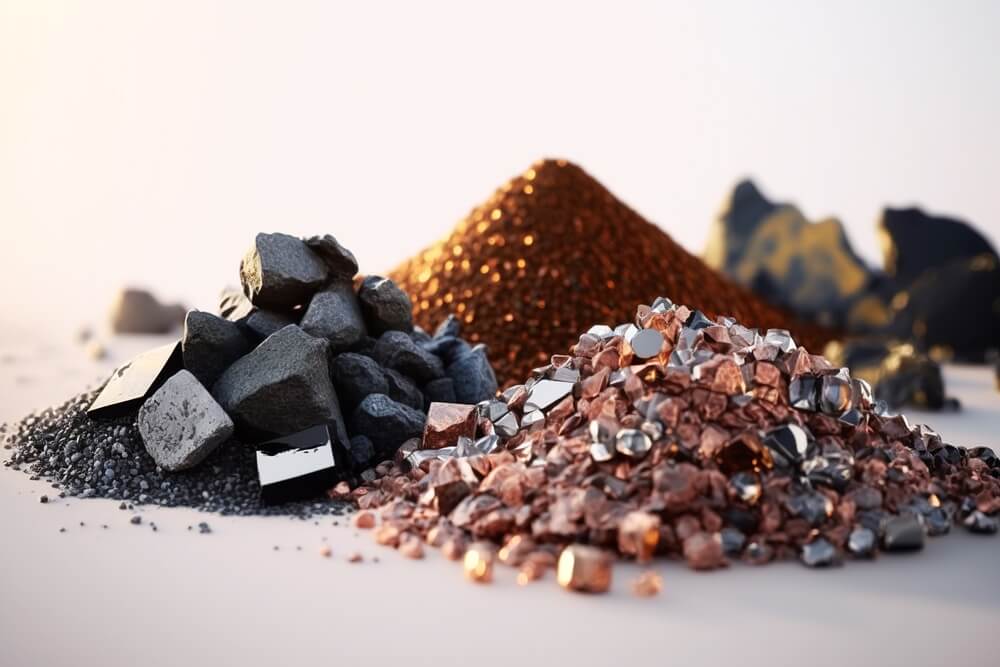
The extent of China’s control of minerals critical to American manufacturing and is well-documented. The PRC dominates production of gallium used in semiconductors, tantalum in jet turbines, graphite in electricity storage and more.
American industry depends heavily on raw materials over which the PRC has total or near-total control. If the two countries ever face each other in a military conflict, this is a major point of leverage China would have over the United States, and over any country that considered siding with the U.S.
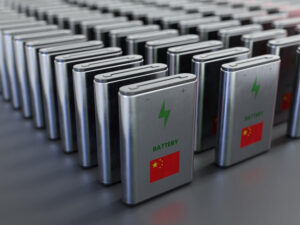
China’s control over mining and processing of critical minerals for batteries used in U.S. weapons and other gear is especially worrisome. It threatens U.S. national security – a conclusion in a recent report by the Coalition for a Prosperous America (CPA) and the Responsible Battery Coalition (RBC).
The report concludes that the U.S. “loss of control over refining and processing—the midstream stages that transform raw materials into battery-grade inputs— has become a national security threat, enabling China to convert industrial advantages into strategic leverage through gray-zone economic coercion.”
Breaking dependence on China
The process of extracting and refining the materials needed to make batteries and then manufacturing them is lengthy and complicated. It involves mining, refining, processing, transportation, assembly and the recycling and recovery of materials. Through deliberate industrial policy, China has gained control of many stages of this process. As a result, the U.S. military is beholden to China for the batteries it uses in technologies as diverse as drones, guidance systems, handheld radios, and electrical grids on bases.
The U.S. has a strong domestic supply of lead-acid batteries – which are used in military vehicles, communication systems, emergency backup installations and other essential defense technologies.
But even this type of battery manufacturing, however, can be vulnerable, due to its reliance on a critical metal – antimony. About one-fifth of the antimony used worldwide goes into battery production. Unfortunately, China controls more than 85% of worldwide antimony ore processing, according to the CPA-RBC report.
Whenever Beijing limits or bans the export of antimony to the U.S., as it did in 2024 and in 2025, prices surge, making lead-acid battery production much more expensive. The ripple effects are wide – transportation, logistical systems, data centers and defense technologies all feel them.
Supply diversification
To its credit, the Trump administration is looking for much-needed minerals in often-overlooked places. Last year, for example, it signed an agreement with the Cook Islands – a small nation in the South Pacific – to allow deep-sea exploration for critical minerals in its territorial waters. This area is rich in a wide variety of valuable elements – cobalt, nickel, titanium and many more – and it is certainly in America’s interest to secure access to them before China can.
Washington has also established the U.S. Strategic Critical Minerals Reserve, also known as Project Vault. Capitalized by $10 billion from the Export-Import Bank of the United States (EXIM), this public-private partnership will stockpile 60 essential minerals– including those vital to manufacturing batteries on American soil – so backup supplies will be available if normal supplies are disrupted.
EXIM Chairman John Jovanovic said that “Project Vault is designed to support domestic manufacturers from supply shocks, support U.S. production and processing of critical raw materials, and strengthen America’s critical minerals sector.”
As an analysis by the Center for Strategic and International Studies put it, Project Vault will act as a “long-term insurance policy for U.S. manufacturers.”
These are important steps to take, but now American policymakers must take
additional concrete measures. These include retaining and expanding tax incentives for domestic mineral production; streamlining the permitting process for mining, refining and recycling; and using federal procurement to reward the recycling of used batteries, as recommended by the CPA-RBC report.
Keeping the U.S. strong and safe requires many thriving industries at home that are free of industrial coercion. The more the United States can free itself from dependence on China for making technologies as essential as batteries, the better.