The U.S. military is facing a critical deficit of critical munitions following its war on Iran. Years of slow production and insufficient procurement contracts have created a vulnerability for U.S. power and influence abroad that is proving difficult to overcome.
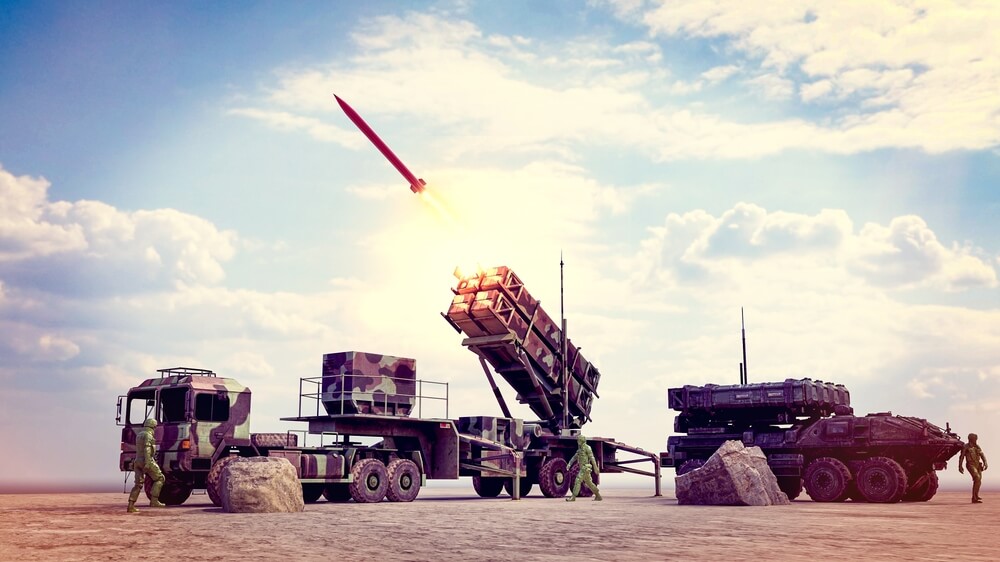
The Trump administration has rightly ramped up pressures on producers and on Congress seeking more inventory faster, striking deals to increase production of the Terminal High Altitude Area Defense system (THAAD) and Patriot Advanced Capability-3 missile.
The administration’s military aims for defensive and offensive preparedness are strikingly correlated with economic policy. In fact, the pairing of the Iran conflict with targeted tariffs welcomes in a new age of U.S. defensive readiness, reshoring defense production while simultaneously increasing productive scale.
In late February, the U.S. struck Tehran, expending over 3,000 missiles within the first two months of Operation Epic Fury. Almost overnight, the strike exposed a fundamental weakness: America’s defense industrial base cannot effectively replenish what it fires. At current production rates, rebuilding reserves will take years.
Deputy Defense Secretary Steve Feinberg has since placed an ultimatum on defense contractors to significantly increase production for critical capabilities. The pressure extends beyond missiles to every layer of the supply chain on which they depend.
Targeted instruments for defense
The administration’s response has been to treat industrial policy and national security as a single problem. Since April 2025’s “Liberation Day” tariffs, trade policy has evolved from sweeping single-rate levies into targeted instruments aimed at specific supply chain vulnerabilities.
In August, the White House announced tariffs on drones and drone components and a price floor on polysilicon, a material critical for semiconductors and aerospace. Both measures were designed to insulate domestic defense manufacturers from the kind of foreign supply shocks that nearly crippled companies like San Mateo, California-based Skydio when China imposed export controls in 2024.
Tariffs therefore are not only economic measures. They are one tool in the broader effort to rebuild American production capacity that the Iran war proved was dangerously insufficient.
America’s military capacity, its strength and its readiness rely on supply chains that have become almost incalculably complicated. Defense products are comprised of thousands of parts, often made individually from a variety of manufacturers, each relying on processed components from around the world. Specialized tariffs have become one factor in manipulating complicated supply chains. And without trade controls, the industry has been at risk from supply shocks and production delays.
Startups getting the nod
When considering that Ukraine has few American Patriot missiles remaining and is requesting 300 more for this winter, the stakes become even more apparent. If the U.S. is unable to meet the needs of the war with Iran, it certainly cannot sell to allies.
The Trump administration, however, has turned this crisis into economic opportunity, invoking the Cold War-era Defense Production Act (DPA) to accelerate manufacturing by reshoring industries and significantly enhancing existing means of production. The DPA and newly established National Security Finance Fund seek to provide expensive government financing and credit to companies seen to be addressing critical supply-chain gaps. These are assisting with the process of channelling public resources into expanding domestic strategic production.
The DPA and the National Security Finance Fund have expanded their purview to include American startups that have historically been passed over as too small or risky for contracting. Defense startups like Hadrian, based in Torrance, California and Telluride, Colorado -based Daedalus have proven themselves quickly, using artificial intelligence for precision automation and robotics and drastically reducing manufacturing time.
Major defense companies like Lockheed Martin have also tapped into startups, aiming to address the sudden need for increased production. Smaller companies can be more versatile, quickly integrating new technologies while efficiently handling supply chain changes.
Hadrian, founded in 2020, has since expanded to four factories across four states, creating thousands of jobs and establishing a memorandum of understanding in December 2025 with Lockheed Martin, one of the world’s biggest and most sophisticated defense contractors. The deal related to the manufacturing of several major weapons, including much-needed Patriot Advanced Capability-3 Missile Segment Enhancement, THAAD and Precision Strike Missile missiles.
The market views this with enthusiasm, and Hadrian recently raised an additional $1.37 billion, valuing the six-year-old firm at nearly $8 billion.
But agreements alone will not close the gap.
The war in Iran has made obvious what years of contracting delays obscured: the U.S. needs production at scale, not just partnerships on paper. By contracting with newer startups, investing in American-led technologies and targeting manufacturing through trade policy, the Pentagon has been turning crisis into capacity.
The strategy is creating a double effect on the industry. Tariffs and defense investment are working aggressively to reshore the American defense supply chain, and in so doing they are reigniting the power of the American defense sector.