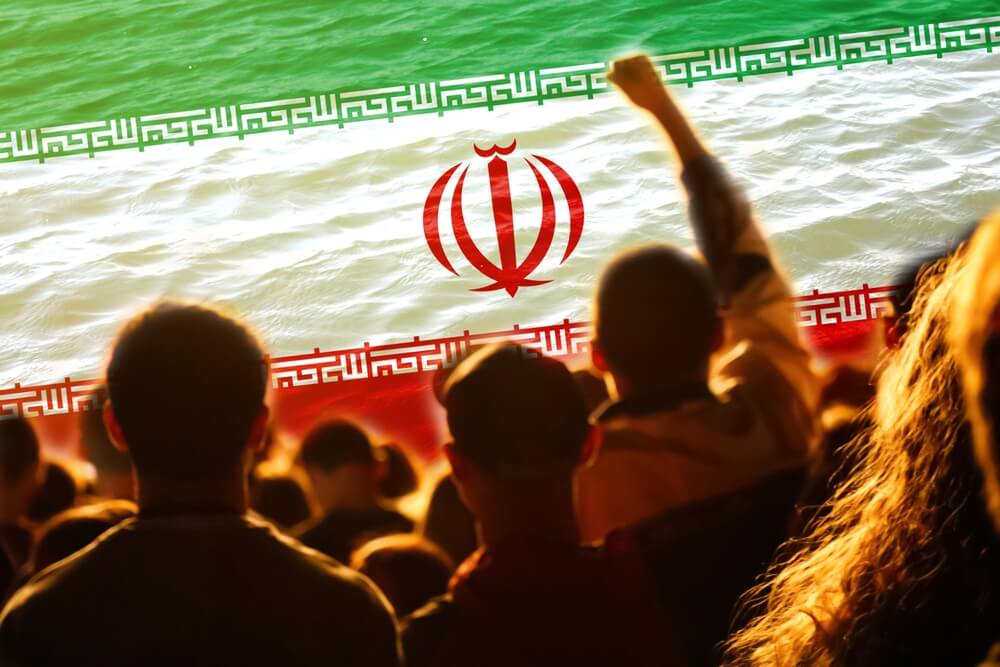
Iran is not witnessing merely scattered protests. It is living through a sustained uprising. One that is nationwide, continuous and politically conscious.
Across the country, from Tehran to Zahedan and from Mashhad to Ahvaz, demonstrations persist despite executions, mass arrests and militarized repression. This level of endurance does not come from anger alone. It reflects organization as well as deep popular support.
Over the past year alone, resistance units affiliated with the People’s Mojahedin Organization of Iran, known by the acronym MEK, say they have carried out close to 40,000 acts of defiance across the country. These actions ranged from organizing and sustaining protests to breaking censorship, disseminating information and confronting symbols of repression. No spontaneous movement can maintain this tempo under such conditions. This is structured resistance operating inside Iran.
The regime itself confirms this reality. Officials repeatedly warn of “organized networks,” “guided unrest” and “coordinated sabotage.” State media and security institutions explicitly name the MEK when explaining the persistence and spread of protests. Leaderless rage cannot explain synchronized actions across provinces, recurring slogans, coordinated strikes and rapid mobilization after crackdowns.
One organized opposition force
For four decades, the Islamic Republic has attempted to erase all independent political alternatives. Reformists function within the regime and serve as its pressure valve. Monarchists have no organizational presence inside Iran. Ethnic separatist groups lack nationwide reach and lack a unifying political vision. What remains is the one opposition force the regime has relentlessly tried to destroy. The MEK.
This resistance is not only operational. It is political. The MEK operates within a broader democratic alternative represented by the NCRI (National Council of Resistance of Iran.) The NCRI, which effectively has functioned as a parliament in exile since 1981, presents a clear platform. A secular and democratic republic. Gender equality. Abolition of the death penalty. Separation of religion and state. Equal rights for ethnic and religious minorities. A non-nuclear Iran committed to peaceful coexistence.
This platform is not symbolic. It has gained measurable international recognition. More than 4,000 members of European parliaments from across political spectrums have publicly endorsed the NCRI’s democratic program. In the United States, the NCRI has bipartisan backing. House Resolution 166, which supports the Iranian people’s right to establish a democratic republic and endorses the NCRI platform, has received majority support in Congress.
A rejection of any authoritarian
As the uprising continues, a parallel debate has intensified outside Iran over what should replace the current regime. In that debate, calls for unity are often advanced as a substitute for political structure and democratic guarantees. These appeals emphasize rallying around personalities or symbols while deferring hard questions about accountability, pluralism and the distribution of power.
Iranians have lived through calls for unity that postponed essential questions of power and accountability. In 1978 and 1979, Ayatollah Khomeini repeatedly invoked unity, urging diverse political forces to rally behind him while deferring democratic guarantees. That unity, stripped of safeguards, opened the door to the consolidation of a new authoritarian rule.
Similar appeals have resurfaced in recent years. Reza Pahlavi, son of the shah who was deposed in 1979, calls for unity while offering a political vision that is inherently exclusive and lacking democratic mechanisms. His approach concentrates authority rather than dispersing it and provides no institutional protection against the return of unchecked power.
History has already delivered its verdict. Movements without democratic structure are either crushed or hijacked. The Iranian people understand this. That is why protest slogans increasingly reject both the ruling theocracy and any return to dictatorship. “Down with the oppressor, whether shah or supreme leader” reflects political clarity, not confusion.
The regime today is weaker than ever. Its regional leverage has eroded. Its economy is collapsing. Its legitimacy has evaporated. But regimes do not fall simply because they are weak. They fall when weakness meets organized resistance with a clear alternative.
The resistance already exists. It has paid the price. More than 120,000 of its members have been executed. Thousands remain imprisoned or under constant surveillance. Yet it continues to operate inside Iran, not from exile studios or ceremonial platforms.
Iranians will decide Iran’s future. But facts matter. And the central fact of this uprising is clear. It is organized and popular. And the regime knows it.