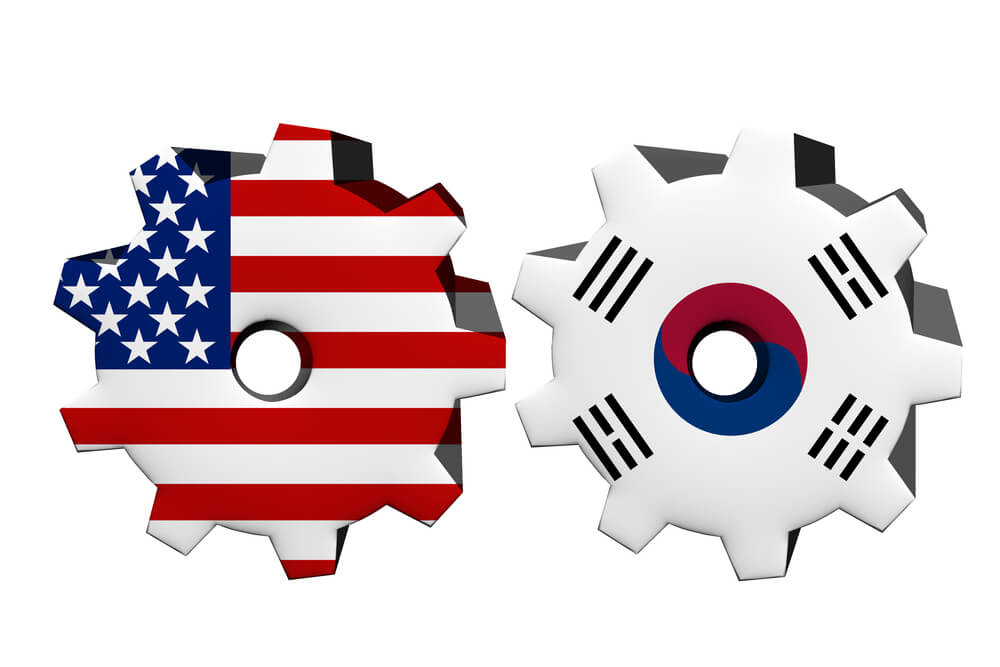
Recent geopolitical turmoil has made it clear that the United States needs reliable partners. And rather than just diplomacy for diplomacy’s sake, the urgent necessity of America’s reindustrialization effort offers concrete objectives for America’s partners: The U.S. push to redress a generation of neglect of supply chains and production capacity can be catalyzed by investment from and collaboration with allies across Europe and Asia.
This should be prime time for South Korea. But Seoul is running the risk of spoiling the opportunity with regulatory overreach. At the end of April, the Korea Fair Trade Commission (KFTC) — Seoul’s economic competition regulator that oversees market competition and restricts monopoly and cartel behavior – asserted a “same person” designation for Coupang and its U.S. citizen founder and CEO, Bom Kim.
This seemingly banal move is troubling. It risks setting a dangerous precedent with severe repercussions for the reputation of Republic of Korea’s business environment as well as the direction of the U.S.-South Korea alliance. A tit-for-tat of responsive regulatory restrictions between Washington and Seoul may result, and that would dampen sentiment and erode trust around bilateral trade and investment opportunities. American and South Korean business leaders need to know that they will be treated fairly and transparently for the U.S.-South Korea alliance to flourish.
The move allows the South Korean government to treat a U.S.-listed, Fortune 150 corporation and its CEO as one and to hold that individual personally liable for a vast enterprise. It essentially extends corporate scrutiny into individual scrutiny.
An ill-timed move
It’s a mode of extraterritorial reach that is uncommon and ill-timed, particularly from a friendly and strategic ally. The KFTC has argued that Coupang’s Korean subsidiary provided cause for launching this move, despite it being a departure from the KFTC’s longstanding practice of using this designation only for domestic Korean companies. But applying South Korean legal conventions and scrutiny to an American company and its American leadership would be a stretch at any point; in the current moment, it strikes as tone deaf.
And that’s to say nothing of the geopolitical stakes for alliance coordination. The U.K.-Republic of Korea (ROK) alliance is strong. But it needs to be stronger.
With the Trump administration well under way with a multi-year “global economic reordering,” the U.S.-South Korea alliance should be focused on promoting a new global operating system and collaborating on the U.S. campaign to reindustrialize.
China is aiming for both regional hegemony and global ascendence. Seoul needs to be a leading partner supporting America in this pivotal moment – not providing Beijing a playbook for exporting extraterritorial regulatory overreach.
Instead, Korea’s mistreatment of a leading U.S. company is quickly becoming a significant thorn in the side of the U.S.-ROK alliance. Coupang is a massive player in e-commerce globally. The company is also unique among its large retail platform peers for serving as a vital conduit for American businesses to reach global markets – in contrast, for example, to those that primarily serve as conduits for Chinese goods to flood US markets.
Strains in the U.S.-ROK alliance
Coupang should be an example for how supply chains, trade and digital standards can be areas for collaboration between Washington and Seoul. Its founder was born in Seoul and raised and educated in the United States. His story should be celebrated for how it demonstrates the best of American and Korean strengths alike. But Korea’s regulatory overreach risks overshadowing that story and inviting negative sentiment about operating in the Korean market.
South Korea’s market is vital to regional prosperity and security. Korea’s market is also complementary, in a strategic fashion, to that of the United States. As America looks to reindustrialize, South Korean heavy industries and tech champions should be vital contributors to the American and allied cause.
The likes of Samsung, SK, LG, Hyundai and Hanwha are already making material contributions to US productive capacity. A strong U.S.-South Korea alliance would make it possible for them to do even more. It would also encourage participation by a greater depth of South Korea’s vibrant tech and industrial sectors, including small and medium enterprises, the players that a platform like Coupang connect.
Sadly, instead we have the harrowing example of an American company facing a serious plight in Korea. Rather than a success story, it has become a cautionary tale. Washington can’t stand by as Seoul attempts to extend a regulatory reach that sets a problematic precedent – one that China will be all too happy to build on. At the same time, Washington needs South Korea as it looks to reorder the global economic system and guarantee peace and prosperity in Asia.
It’s prime time for Seoul. South Korea’s political and regulatory leaders would do well to seize the moment and strengthen the U.S.-Korea alliance rather than undercut it.