
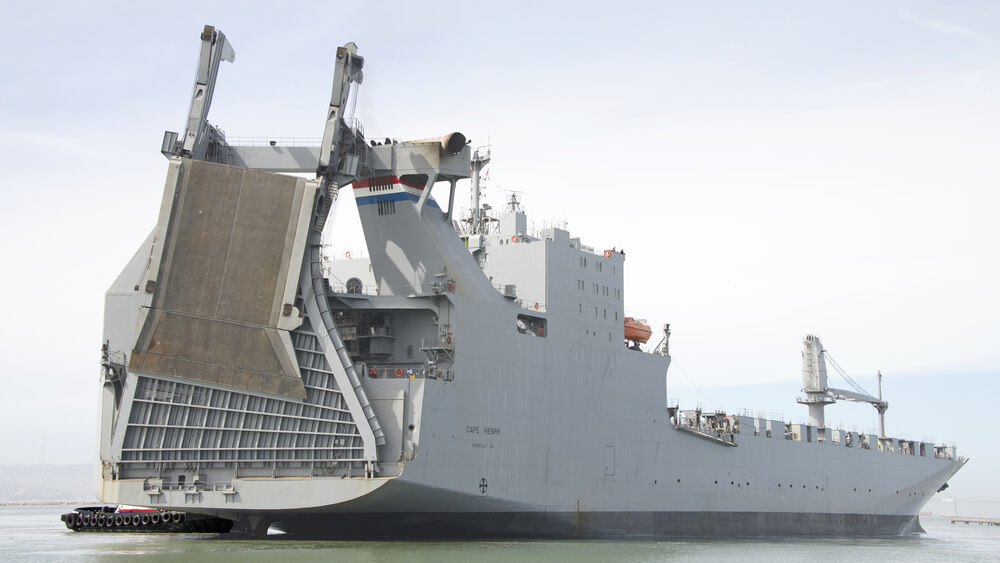
The United States has been—and should again become—a more capable maritime nation, able to carry a larger share of its own commerce and, when necessary, transport troops, supplies and power in war. That goal, however, has always been harder to achieve than many modern accounts suggest.
A 1938 article in Proceedings argued that even after World War I, many Americans still saw the merchant marine chiefly as a wartime necessity rather than as a permanent foundation of national strength.
Much of American finance has long avoided long-term investment in heavy industry like merchant shipbuilding and instead favored faster returns elsewhere. Still, the collapse of U.S. commercial maritime capacity was not sudden; it unfolded over more than a century and a half, from the end of the Civil War through the end of direct subsidies in 1981, and it has continued since.
In December 1980 the total U.S. commercial fleet, including the Ready Reserve Fleet, was 863 ships of which 551 were active in commercial trade, and 200 were vessels required under the Jones Act, which mandates that all goods shipped between U.S. ports must be transported on ships built in the U.S., owned by U.S. citizens and crewed by U.S. personnel.
In December 2025, there were just 190 U.S. commercial ships, of which 93 were ocean-going trade vessels. There were just 44 ready reserve vessels. The U.S. in 1980 ranked no. 11 globally in numbers of ships. In 2025 it ranked no. 22.
Reversing that trajectory will require investment on a transformational scale and rapid adaptation to new technology. Just as the United States failed in the 19th century to adjust quickly enough from wooden sail to iron and steel steamships, a modern revival will depend on timely adoption of tools such as small modular nuclear reactors, greater automation and new logistics systems that make maritime transport more efficient and commercially attractive.
The high tide that ebbed
The U.S. commercial maritime industry reached its zenith in the years before the Civil War. Between 1800 and 1840, U.S.-flagged ships consistently carried more than 80 percent of the nation’s commerce, and in the 1820s that figure exceeded 90 percent.
American shipbuilding also enjoyed a major cost advantage: by British standards, U.S.-built ships cost only three to four pounds sterling per ton to construct, compared with five to seven pounds for comparable British ships. After the repeal of the last British Navigation Acts in 1849 opened the India and China tea trade, American clipper ships proved faster than British rivals while carrying more cargo at lower cost. By 1855, the U.S. merchant fleet numbered 2,024 ships totaling 588,450 gross tons.
What ended this prosperity was a combination of war, technological change and industrial failure. The Civil War and the collapse of the whaling industry removed one of the country’s most profitable maritime sectors; the last American whaling ship left business in 1925. At the same time, the United States failed to respond effectively to the industrial revolution at sea. Iron and steel steamships were initially less elegant than the finest clippers, but they were more reliable, scalable and better suited to regular trade routes.
Wooden ships also faced practical size limits that steel ships did not. By 1882, British shipbuilding labor costs were 44 percent lower than those in the United States, and advanced British ships became increasingly attractive to global buyers. The result was dramatic: in 1830 roughly 90 percent of U.S. commerce moved in U.S.-flagged ships, but by 1914 those ships carried only about 10 percent of America’s ocean trade.
While the U.S. Navy began to recover from its post–Civil War decline in the 1880s through new steam and steel warships, the commercial maritime sector received no comparable surge in investment. In 1890, the merchant fleet still numbered 1,051 ships, but total tonnage had fallen to 294,123 gross tons, and nearly half of those ships were still wooden sailing vessels. Attempts at subsidies through mail contracts, military supply, and early cargo preference proved insufficient to reverse the decline.
The two world wars did prompt enormous merchant-ship construction programs. In World War I alone, the government placed contracts for 17.4 million gross tons of shipping, and by the end of World War II some 5,000 government-owned merchant ships were in service. Yet these achievements depended on extraordinary wartime mobilization and spending. They did not amount to a durable peacetime solution for sustaining a strong commercial maritime base.
A direction for the future
The record from 1865 to the present underscores how difficult it is to sustain both a maritime nation and the shipbuilding base required to support one, especially during periods of technological change.
Today, U.S. maritime capacity is again thin, while China dominates much of global shipbuilding. Even so, technological and logistical change may create another opening for renewal. The United States has long played an outsized role in maritime innovation, from the first steamship to cross the Atlantic, Savannah, to the first nuclear-powered merchant ship, NS Savannah, the record Atlantic crossing of SS United States, and Malcolm McLean’s pioneering role in intermodal transport.
Emerging technologies—including small modular reactors, artificial intelligence in shipbuilding and operations, and logistics systems that integrate autonomous movement of goods inland—could create more favorable conditions for maritime recovery.
But history suggests that opportunity alone is never enough. A revival of U.S. commercial maritime strength will require policy, capital, and sustained industrial commitment, not merely crisis-driven mobilization after decline has already become severe.