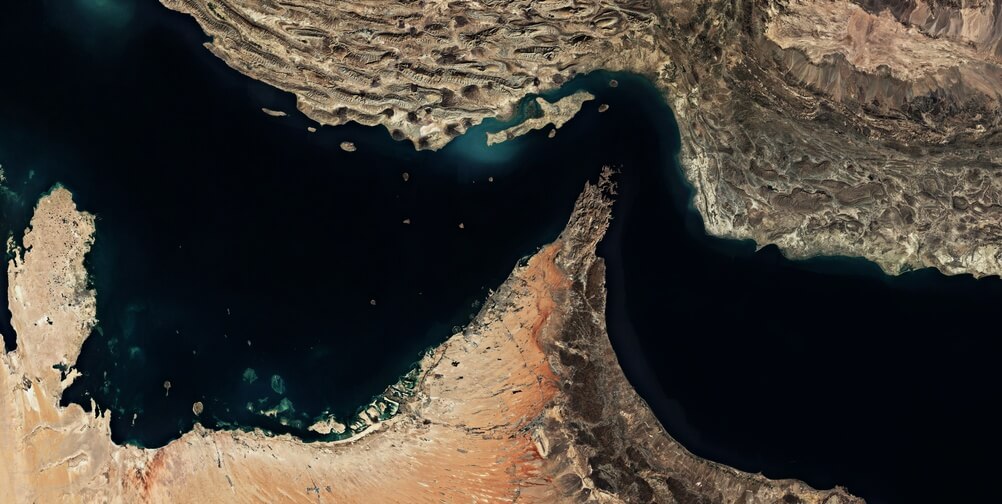
When U.S. President Donald Trump called on allies including Japan and South Korea to help secure the Strait of Hormuz, the request appeared to be clear cut. However, the critical question for Tokyo and Seoul is not whether they should contribute through naval forces, but how much they could realistically deploy to the Middle East as the tenuous ceasefire takes hold without undermining deterrence in East Asia.
At first glance, South Korea appears to have a robust navy that could conduct expeditionary operations. Nevertheless, a closer look reveals that its core assets are intricately integrated with the deterrence mission on the Korean peninsula.
In particular, Aegis destroyers are indispensable in responding to the North Korean ballistic missile threat. These platforms are not easily replaced, nor can they be rotated out without impacting the integrity of the broader missile defense. Moreover, South Korean destroyers play a central role in anti-submarine warfare (ASW), and it is increasingly becoming important due to North Korea’s continuous investment in submarine-launched ballistic missiles and underwater infiltration capabilities.
Taking all these requirements into account, the margin for overseas deployment is severely limited. Through the Cheonghae Unit—which has long conducted anti-piracy missions in the Gulf of Aden—South Korea maintains experience in distant maritime operations.
This offers a useful reference point for what is sustainable. Seoul could continuously maintain a single destroyer deployment without seriously impacting the regional posture. Additional ships can be sent in exigencies for a limited period of time—yet it is unsustainable without drawing down the forces necessary for homeland deterrence.
Japan more flexible
Japan’s situation is a bit more flexible. But only marginally so.
Japan’s Maritime Self-Defense Force (MSDF) has the structural advantage to sustain expeditionary deployment thanks to the long history of operational experience in the Middle East and its logistics presence in Djibouti. However, Japan’s strategic environment is even arguably more challenging than South Korea’s.
Chinese naval and coast guard activities are intensified in the East China Sea, while the possibility of a Taiwan contingency is increasing the importance of maritime preparedness. At the same time, North Korea continues to remain a grave and imminent threat, according to the Japanese defense authorities.
In the short term, Japan and South Korea could assemble roughly four to six vessels— three to four for Japan and as many as two for South Korea—for operations related to the Strait of Hormuz. However, such an estimation indicates a temporary deployment, rather than a steady-state posture.
When sustainability is considered, high-end escort vessels that could maintain a constant presence in the region would be reduced to approximately two to three ships —as many as two for Japan and one for South Korea.
A role-centered approach
Given the realistic constraints, a role-centered approach is a necessity. South Korea’s contribution should be anchored in the Cheonghae model, centered preferably on a single destroyer under a clearly defined maritime security mandate. Allied deployment should be prioritized in the Gulf of Oman and adjacent sea lanes, rather than the narrowest and contested area within the strait.
Sending an Aegis destroyer to Hormuz should be avoided since these platforms serve as critical nodes in South Korea’s missile defense, providing persistent tracking and early warning against North Korean ballistic missile launches. Deployment of these ships would create a notable security vacuum for Seoul.
Meanwhile, Japan should center its focus on areas that could offer maximum value with minimum strain on its core deterrence. Considering Japan’s existing capabilities as well as the nature of the threats in Hormuz, mine countermeasures and intelligence, surveillance and Reconnaissance would be particularly relevant.
Rotational model is best
A rotational model with periodic review points could help prevent a temporary contribution from turning into an open-ended commitment. This is especially important given that the security environment of the Middle East and the Indo-Pacific in both is fluid.
The U.S. role would also be crucial in making this approach possible. If Washington demands allied contributions in Hormuz, it should be prepared to compensate for any resulting gap in East Asia. Reinforcing U.S. naval and air forces in the Western Pacific would help maintain deterrence and signal to its allies in the region that their security would not be compromised in the process of supporting global missions.
In an era defined by complex crises and finite resources, effective alliance management is dependent not only on capability but also on acknowledging limitations. For Tokyo and Seoul, the most important task is to carefully calibrate contribution—ensuring that support does not come at the expense of regional security—rather than maximizing it.