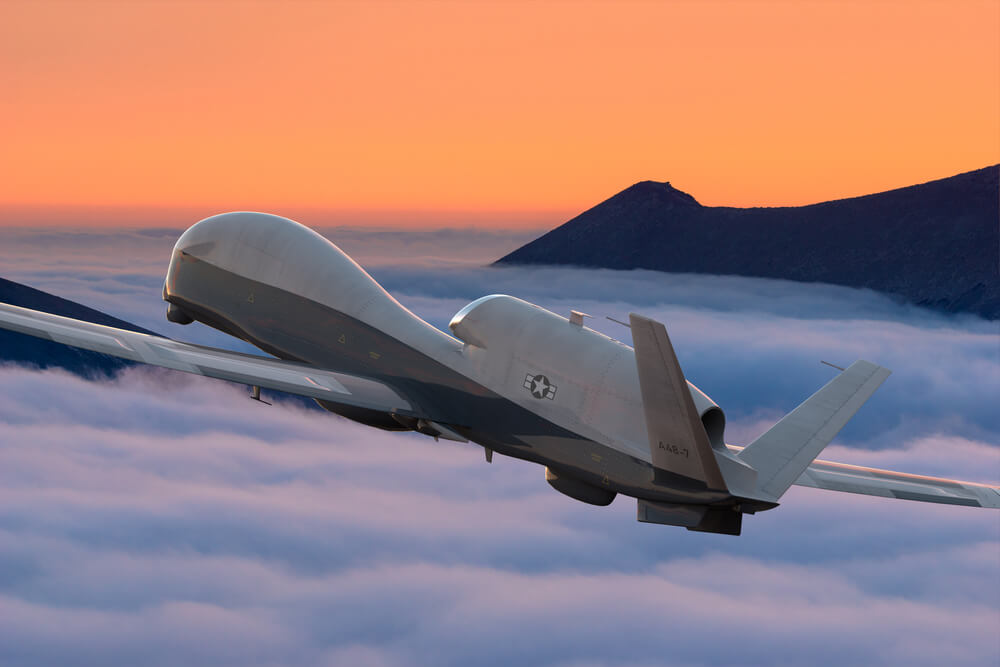
The ‘Warfighting Acquisition System’ and What it Means for Weapons Development
The reality of 2026 and the array of current and evolving threats demand that our procurement cycles speed up dramatically.


The reality of 2026 and the array of current and evolving threats demand that our procurement cycles speed up dramatically.

We need to find innovative ways to stretch our industry training dollars, especially as advancing military threats spur the need for more advanced weaponry and a well-trained workforce.

President Biden’s proposed defense budget for fiscal year 2025 eliminates further funding to bridge the shortfall in electronic components needed for semiconductors to function.

Until and unless the Russians understand that they can’t win militarily, a negotiated settlement is not an option.
Our national defense and economic security are at risk because we rely so heavily on adversaries and geopolitical competitors for the technologies that power our military systems and critical infrastructure.

The U.S. Army’s newly released fiscal 2025 budget incorporates the top lessons from combat in Ukraine and sends a powerful message as a deterrent against possible conflict with China.

In order to prevail in this new Cold War, the U.S. must ensure that its high-tech companies are able to compete successfully against their Chinese rivals.

Among Poland’s weapons purchases, nothing is more likely to prevent Russia from invading NATO Europe than the M1 tank – arguably the West’s apex ground combat predator.

Congress and key agencies in the executive branch and not doing enough to support defense innovation. More can and should be done – or else our efforts to deter conflict will ring hollow, and we will risk failure in the battlespace.
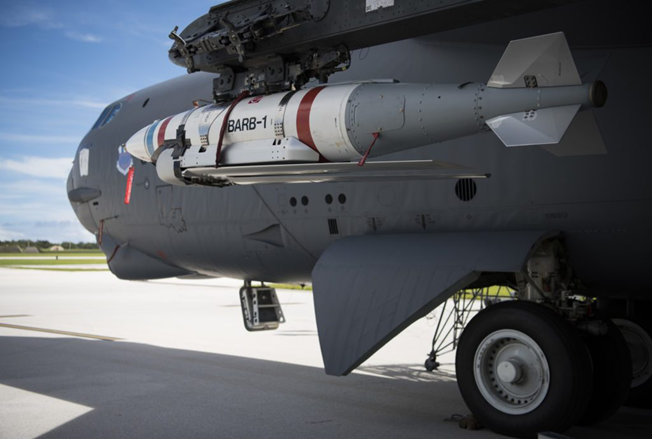
The nation’s mine infrastructure is facing a historic nearly-40 plus year period of neglect and under-investment since the end of the Cold War. This decay also includes industrial capacity, explosives, training, infrastructure, ships and personnel.

Sen. Paul uses half-truths that may be appealing to some Americans. They should know the whole truth and understand the stark consequences if we fail to maintain our resolve.

The onus is on industry for thoroughly researching value creation opportunities and conveying options to the Department of Defense.

Disorienting weapons that operate at the speed of light or speed of sound – such as laser dazzlers or long-range acoustic hailers—can be valuable complements to more lethal systems that are less responsive. Moreover, intense, unexpected stimuli can unnerve military personnel in ways that cause them to flee the battlefield.

It is more stabilizing and better for national security that Congress is skeptical about where U.S. space leadership and space policy are headed. Let’s hope the responsible oversight demonstrated in the annual defense bill continues.

Pressure is mounting in Congress to update legislation that guides the use of defensive systems that protect against aerial drones. At present, the legislative framework underpinning the use of these systems needs major revision because it was formulated at a time before the widespread proliferation of drone technology.

To maintain its status as a global superpower, the United States cannot afford to fall any further behind in our hypersonic military systems.
