
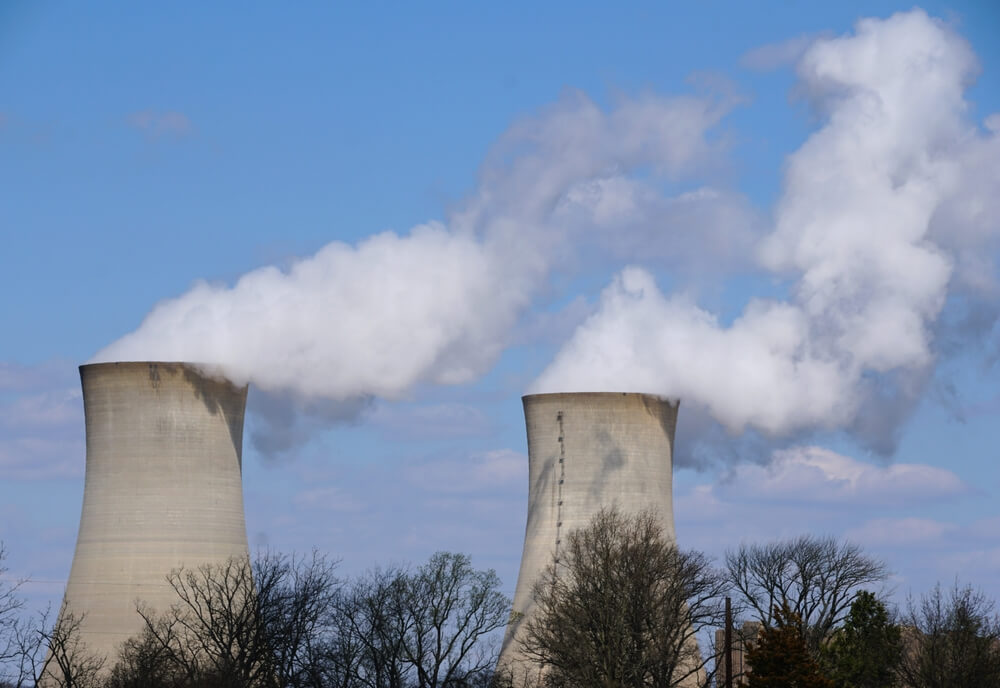
President Trump in April signed an executive order directing an increase in the production of coal to ensure U.S. national security when it comes to energy independence. But while Trump’s support for fossil fuels has captured headlines, it is far more essential for the U.S. to revitalize and expand the nuclear energy industry to ensure robust national security.
The reality is that America will need more than fossil fuels to meet its energy needs, which are projected to grow dramatically because of new demand from artificial intelligence (AI) data centers, increased domestic manufacturing and greater electricity grid loads.
For example, according to Grid Strategies, a consulting firm, U.S. electricity demand is expected to increase by almost 16% over the next five years. But according to a 2024 report by the North American Electric Reliability Corp., which analyzes the U.S. grid, growing electrical need are out-pacing the grid due to the time it takes to build new generation resources. The ability to meet power needs of the nation is a fundamental national security problem.
Nuclear can fill the need
Nuclear energy, which currently provides about 20% of electricity in the U.S. is uniquely well-positioned to fill the gap. According to the Center for Strategic Studies (CSIS), nuclear power is a highly efficient energy source that offers reliability and stability to the grid. Nuclear facilities also have the advantage of being buildable on former coal sites and use existing transmission lines.
“A vibrant civilian nuclear energy sector is a critically important national security asset,” the Atlantic Council’s Global Energy Center noted as far back as 2019. In addition to its power generation, the think tanks cited conservative estimates that it contributes the equivalent of at least $42.4 billion annually toward national security priorities.
Unfortunately, the U.S. has neglected its nuclear programs for decades. As noted by the U.S. Department of Energy (DOE), construction of new reactors has been slowed by cost overruns and regulatory delays. The U.S. also relies on Russia for much of the enriched uranium it needs to fuel its power plants while its domestic supply has dwindled. This leaves the U.S. vulnerable to pressure from Moscow.
The goal of boosting nuclear power generation to help fill increasing energy needs spans the political spectrum.
For example, the 2024 ADVANCE Act enjoyed bipartisan support and includes provisions to expedite and streamline regulatory process and approvals for microreactors and other technologies, removing roadblocks that have made constructing reactors costly and time-consuming.
And in May, two executive orders by President Trump set policy designating AI data centers as critical defense facilities and called for deployment of advanced nuclear reactor microreactors to power military installations and data centers. In addition, according to the Atlantic Council, an international affairs think tank, other efforts include a recent $3.4 billion government program to build domestic uranium capacity and a plan to work with other countries to establish a reliable nuclear fuel supply chain.
Obstacles in the way
Despite this momentum, re-establishing U.S. dominance in nuclear energy continues to face a range of complex barriers.
As noted by the Center for Strategic and International Studes (CSIS), large-scale nuclear power plants take between six and 10 years to build. There is also a long running public wariness about nuclear safety and disposal, given high-profile nuclear accidents like Three Mile Island in 1979.
According to Pew Research Center, which conducts public opinion surveys on a range of issues, while more Americans have begun to support nuclear power, most are still more likely to favor solar and wind power. Spent nuclear fuel also persists as a problem, with continuing public concerns over its safe transportation, storage, and disposal. Building new reactors is another challenge with conventional reactor designs resulting in multi-billion dollar projects that historically have gone well over planned budgets and schedules and experienced delays in licensing and regulation approvals.
Some of these concerns are outdated. As noted by DOE, nuclear power is the largest source of clean power in the U.S., being both safe and reliable with the advantage of being carbon free and emitting zero greenhouse gases.
It’s time for the U.S. to support a nuclear power revival with a thoughtful and comprehensive strategy. A 2020 DOE provides just such a roadmap for rehabilitating the U.S. nuclear energy program. It calls for strengthening the uranium industry and the nuclear fuel supply cycle, rebuilding a nuclear energy workforce and advancing nuclear technologies. For example, it supports the U.S. taking the lead in developing advanced reactor technologies, such as small modular reactors and microreactors. These moves will help the U.S. secure its energy supply and dominate international nuclear energy markets.
When it comes to America’s energy needs, it’s all hands on deck. The U.S. cannot afford to ignore the massive potential of nuclear energy and its role in national security.