Ongoing security threats across the Middle East, Eastern Europe and the Persian Gulf are forcing emergency medical systems into prolonged periods of high-intensity emergency response. Missile and drone attacks are placing sustained pressure on dispatch centers, frontline responders, hospitals and volunteer networks.
The experience in Israel provides real-world examples for other nations of how to manage mass-casualty threats from the latest dangers.
In Israel, which has experienced hundreds of ballistic missile attacks between late February and April, and again this summer, the national emergency medical service – Magen David Adom (MDA) – has treated more than 2,400 injuries from missile impacts, shrapnel hits, falls from civilians running to shelters and other incidents across dozens of cities.
One of the biggest operational shifts has come with the need to respond to missiles carrying cluster munitions, which disperse dozens of explosives across a radius up to three miles creating numerous scenes at once.
In addition, some cluster bomb missiles release corrosive fumes that can cause internal respiratory burns, requiring hazmat clearance before medics could provide care. Others have been equipped with delayed fuses that specifically target first responders, exploding minutes or hours after the initial strike.
Working under these conditions has required extreme caution and constant adjustment.
Preparedness is crucial
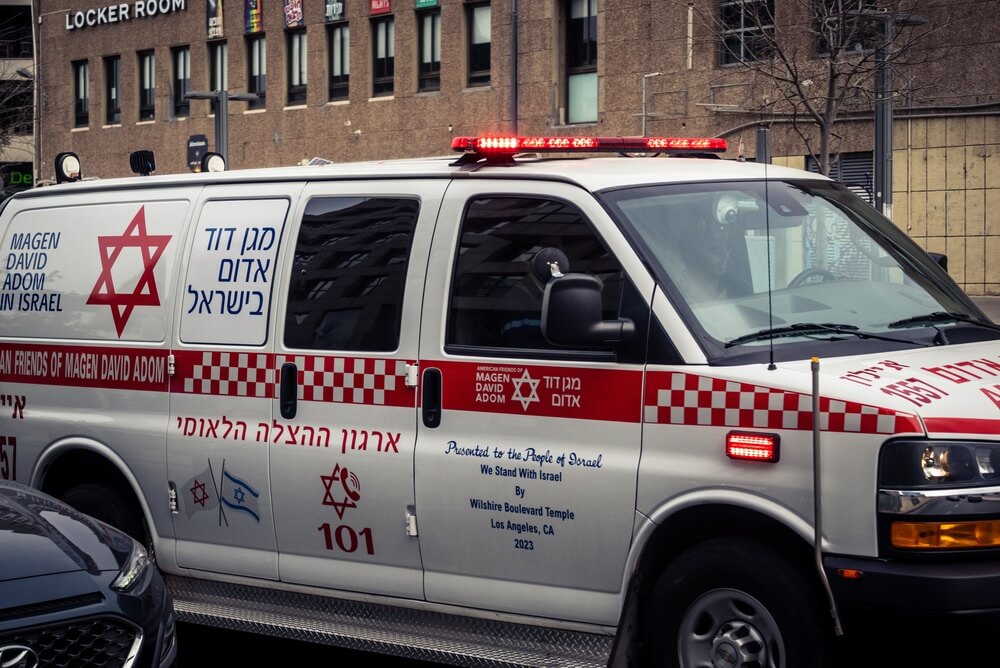
During the recent conflicts with Iran, MDA operated at full readiness from the outset. MDA officials staffed mobile intensive care units, medi-cycles and other rapid response vehicles and positioned them across the country, allowing teams to be dispatched immediately in response to Iranian attacks.
This level of readiness was the result of targeted preparation in the years prior, particularly following earlier rounds of conflict that exposed gaps in large-scale response. We expanded our focus on training for mass-casualty scenarios that reflect real world conditions.
Paramedics and EMTs began working extensively with simulation-tools, including virtual reality scenarios that replicate the sensory and cognitive demands of mass-casualty events. Teams worked through simulations that included noise, confusion, incomplete information and competing priorities.
The goal was to build familiarity with those conditions before facing them in the field, so that when multiple scenes emerged at once, crews could triage, make decisions and coordinate even before the complete picture became available.
The same approach can strengthen emergency systems anywhere — train for complexity. The lessons include: investing in realistic simulations; building a dispatch system with the capacity to handle more than one scene at a time; training teams to operate with incomplete information; and, positioning resources in a way that allows for rapid, distributed response.
Expanding response capacity
Large-scale emergency response depends on having a scalable responder network already in place. At MDA, our emergency medical services (EMS) were built around that model from the outset.
What makes MDA’s model particularly effective is that our responders, who are mostly trained volunteers, including doctors, operate within the same communities where they live and work. This can ensure a local response within minutes.
We rely on the volunteers to know the streets, the buildings and the people. They can use that familiarity to navigate quickly and begin providing care immediately. In addition, our organization relies not just on ambulances, but medics also travel by bike, motorcycle or even by foot in dense communities. These alternate modes of transportation make it possible to reach areas where roads may be closed or blocked.
EMS systems looking to expand their response capacity should invest in building and maintaining integrated community-based responder networks, make sure they have agile and flexible modes of transportation to reach scenes and are fully integrated into the system before a crisis happens.
Supporting first responders
Sustained emergency response places a different kind of strain on EMS teams—requiring them to move constantly between high-intensity scenes and routine operations, often over extended shifts and with little time to reset.
To address this, MDA has developed structured systems to support responders before, during and after major incidents. These include immediate access to mental health professionals following difficult calls, as well as formal debrief processes that allow teams to process events in a structured setting.
The goal is not to eliminate stress—that is not possible in emergency medicine—but to ensure that responders can continue to function effectively over time. Resilience has to be built into the system, not left to individuals.
The conditions Israel has faced are extreme, but the principles that have guided our response are not and are applicable elsewhere. Preparedness determines outcomes. Community-based responders extend our reach. Structured support allows our teams to continue operating under sustained pressure.
As more countries deal with and prepare to meet new threats, EMS organizations need to plan how they will adjust operations in order to respond if conflict reaches their doorstep.
Raphael Herbst is deputy director of Magen David Adom’s international relations department and is based at MDA Headquarters in Ramla, Israel.