
Europe presented a united front at the recent Munich Security Conference. Across panels and meetings and in speeches, heads of state and officials of various stripes said much the same thing in different words, speaking all the time of urgency, unity, sovereignty. The problem is that saying one thing is very different from doing it.
Europe is not in fact short of money. Germany, Britain, France and Italy are the world’s third, sixth, seventh and eighth largest economies, respectively. Germany alone created a $100 billion special defense fund following the Russian invasion of Ukraine, and other countries have followed suit with increases in defense expenditure of their own.
Defense budgets across the board are rising at a speed not seen in decades. The constraint is how that money is used. Europe’s leaders say they want to move faster and build real European capability; but when contracts are signed, money still flows along national lines.
Parochial defense spending
The language is pan-European. The spending is thoroughly parochial.
The European Space Agency has been behind some outstanding work, but the present geographical return system entails awarding industrial contracts to countries of the same value as that which those countries have paid in. In other words, pay in €100, get €100 back in contracts.
National defense budgets work in the same way, and the rules did not appear by accident. Governments use them to support domestic industry and protect jobs. But incentives drive behavior. So, when money is tied to national return, companies think nationally, lobby nationally and build nationally.
The result is duplication.
Countries across Europe are building similar systems in parallel instead of pooling effort. The Leopard tank is a good example of this. On paper, it’s one platform. In practice, there are many different versions. Why? Because each country modifies it to suit their own requirements and their own industries.
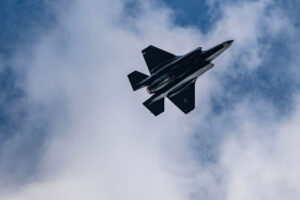
In space, governments also commission overlapping systems, add their own features and, all in all, operate inefficiently. The blunt truth is that they spend more yet move more slowly. The Future Combat Air System (FCAS), Europe’s would-be sixth-generation fighter, has recently stalled under the weight of work-share disputes and industrial politics – the latest object lesson in how shared ambition can collapse without shared authority.
Satellite program is case in point
In the space context, IRIS², which stands for Infrastructure for Resilience, Interconnectivity and Security by Satellite, stands out.
This program was meant to be shared infrastructure. A secure European communications network that would finally help Europe to achieve its longtime goal of “strategic autonomy” from the U.S.
Yet the European Union procurement process has been slow, complex and heavily negotiated. The structure reflects industrial balancing as much as operational need. No wonder, then, that we hear Germany discuss building sovereign constellations alongside it. But scale depends on combining demand. When several countries buy into the same system, the fixed costs are spread across more users. Consequently, unit costs fall, standards come into alignment and integration becomes simpler.
When institutions are under pressure, they have a vexing way of falling back into old, bad habits. Procurement teams return to the suppliers they know well. Ministries protect the established primes. Officials repeat the processes with which they are familiar. Large bureaucracies tend to resist change, especially under stress. This instinct is understandable; but it isn’t pragmatic – not if Europe wants what it says it wants: speed, resilience, sovereignty, unity.
Finland is a positive example
Finland offers a useful contrast.
It shares an 800-mile border with Russia and fought the Winter War and the Continuation War in the late 1930s and 1940s against the Soviet Union. War feels real. Finland maintained conscription, built reserves and planned mobilization for decades. In 2023, after Russia’s full-scale invasion of Ukraine, it joined NATO without delay.
The lesson is not nationalism. Finland is a nation-state and acts as one. The lesson is clarity and execution. In Munich, many leaders spoke in conditional verbs, such as we should, we must, we could. The Finnish defense minister spoke in concrete terms about capabilities, timelines and delivery. Speed comes from decisions, not declarations.
We find ourselves in Europe living out a contradiction. Our leaders call for one thing and do the other. Strategic autonomy at the European level demands that we do something we teach every child to do, which is share. For as long as each country designs, funds and controls its own constellation or communications architecture, then Europe simply duplicates its infrastructure. Each state pays for its own satellites, ground segment and upgrades. Costs rise and integration becomes harder.
Money is not the obstacle. Nor is the barrier technical. The problem is cultural.
Our procurement systems favor the companies they already know. Industrial politics favors firms at home. Governments default to national solutions, even when a shared European approach would be more efficient. And this is in large part because there is no true European political accountability for defense. National ministers answer to national voters. A European commissioner does not command a European army or budget.
To fix this, Europe must match its rules to its goals. If it wants shared capability, it must fund shared programs. Procurement should reward common standards and joint platforms, not national duplication. And it must accept a simple point — sometimes the right supplier will sit in another European country.
That might hurt the pride of the British, the French or the Germans. But in defense policy, efficiency is not a matter of pride. It is a matter of survival.