In September 2010, a Chinese fishing trawler collided with Japanese Coast Guard vessels near a disputed island chain in the East China Sea. Within weeks, the Chinese government sharply curtailed rare earth exports to Japan, cutting supply by as much as 40 percent. Prices surged, with neodymium oxide rising nearly 1,400 percent.
Japanese factories making motors, electronics and defense components had few alternatives. Several began relocating production to mainland China.
That was the point. China had weaponized its supply chain to achieve an economic and geopolitical objective.
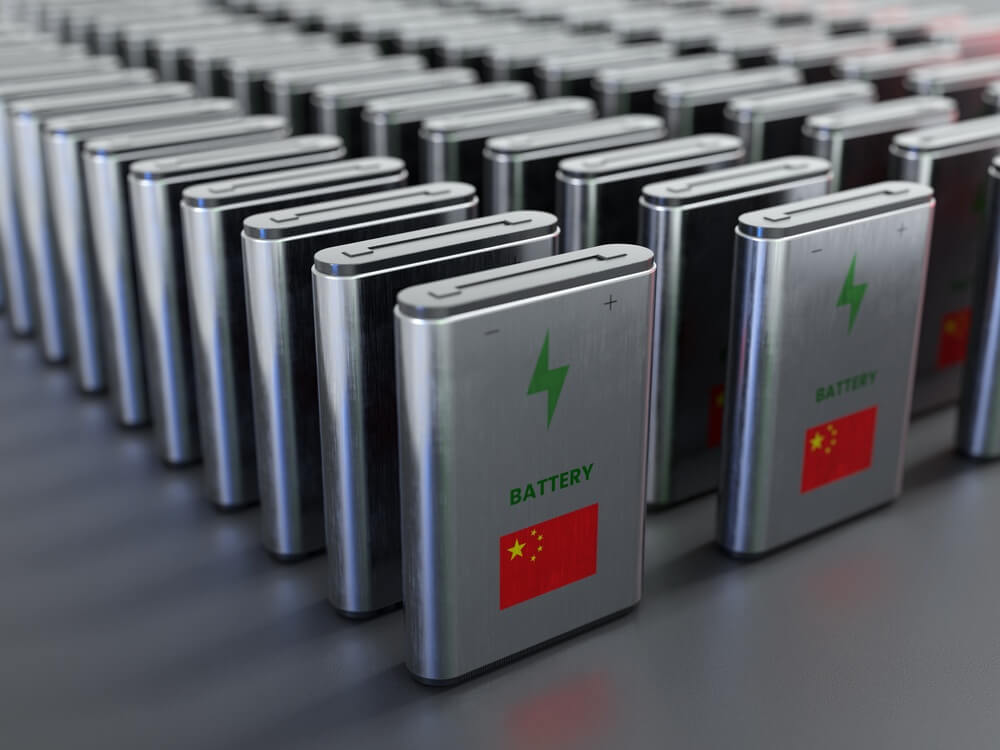
That vulnerability persists today in lithium-ion batteries. In October 2023, China began requiring export permits for graphite, a material used in roughly 95 percent of the world’s batteries, and it has continued tightening those controls to target the United States.
The problem is that compliance paperwork can make a supply chain look safer than it is.
The National Defense Authorization Act’s (NDAA) restrictions on Chinese materials are designed to address this vulnerability. The NDAA phases in defense battery sourcing restrictions beginning Oct. 1, 2027, for batteries produced by specified Chinese companies. It adds restrictions on advanced batteries linked to additional countries of concern beginning in 2028.
Defense contractors are certifying compliance and updating their bills of materials, but “NDAA compliant” does not necessarily mean a supply chain is secure from disruption.
A serious supply chain vulnerability
More than 90 percent of the world’s graphite processing happens in China, making graphite one of the defense battery supply chain’s deepest vulnerabilities. Graphite is commonly used in the battery anode, the part of a battery that stores and releases energy.
Some manufacturers have moved toward silicon-based anodes, but many rely on synthetic silicon derived from silane gas. This engineered material can cost up to 20 times more than graphite, so controlling costs requires manufacturers to remain reliant on Chinese graphite.
The result can be a battery that satisfies current compliance requirements while remaining vulnerable to the same underlying supply-chain disruption.
An alternative already exists. In 2020, Tesla highlighted raw metallurgical silicon (MGS) as a path for battery anodes. MGS stores 10 times more energy than graphite and is already produced commercially at a fraction of the cost of synthetic silicon.
For companies racing to meet NDAA requirements, being “on schedule for compliance” is not the same as having a secure supply chain. If a battery still depends on a material China can restrict, China can still turn off the supply.
The China squeeze
The platforms most dependent on batteries are also among the most important systems for modern warfare: Unmanned aerial and underwater vehicles, autonomous ground vehicles, tactical robotics and soldier-carried systems. The U.S. Drone Dominance Program exists because the lessons from Ukraine and elsewhere are impossible to ignore.
Many of these systems still depend on graphite. China has already demonstrated its willingness to use export controls on critical minerals. Its restrictions introduced in late 2023 and tightened through 2024 should be treated as a warning.
The warning is concrete. Chinese exports of flake graphite fell 94 percent in a single month, while shipments to the United States fell to zero. China has temporarily lifted this restriction, but they have scheduled to resume it in November. .
If restrictions tighten during a defense procurement cycle, there may be no domestic alternative available at the scale or speed required.
Reducing the risk
Three tactics can help curtail supply chain risk.
First, the Department of Defense should designate MGS as a strategic material for the defense industrial base. MGS is already produced in the United States and can serve as a domestic alternative to graphite in silicon-based battery anodes. The raw material, technology and manufacturing infrastructure already exist. It is the only scalable alternative to Chinese graphite.
Second, we need to protect domestic silicon producers. The U.S. has lost more than 70 percent of its silicon production capacity in under a decade, falling from 16 operating furnaces in 2016 to fewer than five today. These facilities cannot be rebuilt quickly if they disappear. The Defense Production Act exists in part to address this kind of vulnerability.
Third, defense suppliers need to incorporate batteries that are verifiably free of Chinese materials into defense programs now. Unmanned systems, autonomous systems and soldier-carried platforms are logical places to start. Domestic material inputs can provide a path toward a more secure battery supply chain.
Procurement questions should go beyond whether a battery technically complies with the NDAA. Program managers should ask:
- Where do the critical materials come from?
- How concentrated is that supply chain?
- What alternative exists if foreign supply suddenly becomes unavailable?
That means not just checking a compliance box but actually reducing risk. U.S. defense procurement remains dependent on critical-mineral supply chains, and NDAA compliance does not eliminate that vulnerability. America’s challenge is to achieve true industrial sovereignty by addressing it before it hobbles the systems the military depends on most.